
What happens when a court case has the potential to reshape society?
In South Africa, a legal battle is unfolding that could permanently reshape the moral and social fabric of our nation. At its heart is a question that touches every community: should prostitution be legalised?
If prostitution is legalised, it will change public policy, reshape social norms, and redefine what our culture considers acceptable.
As the State did not fulfil its basic role to defend the current legislation that criminalises prostitution, Cause for Justice (CFJ) stepped in as an opposing party – defending the fundamental human dignity of every person.
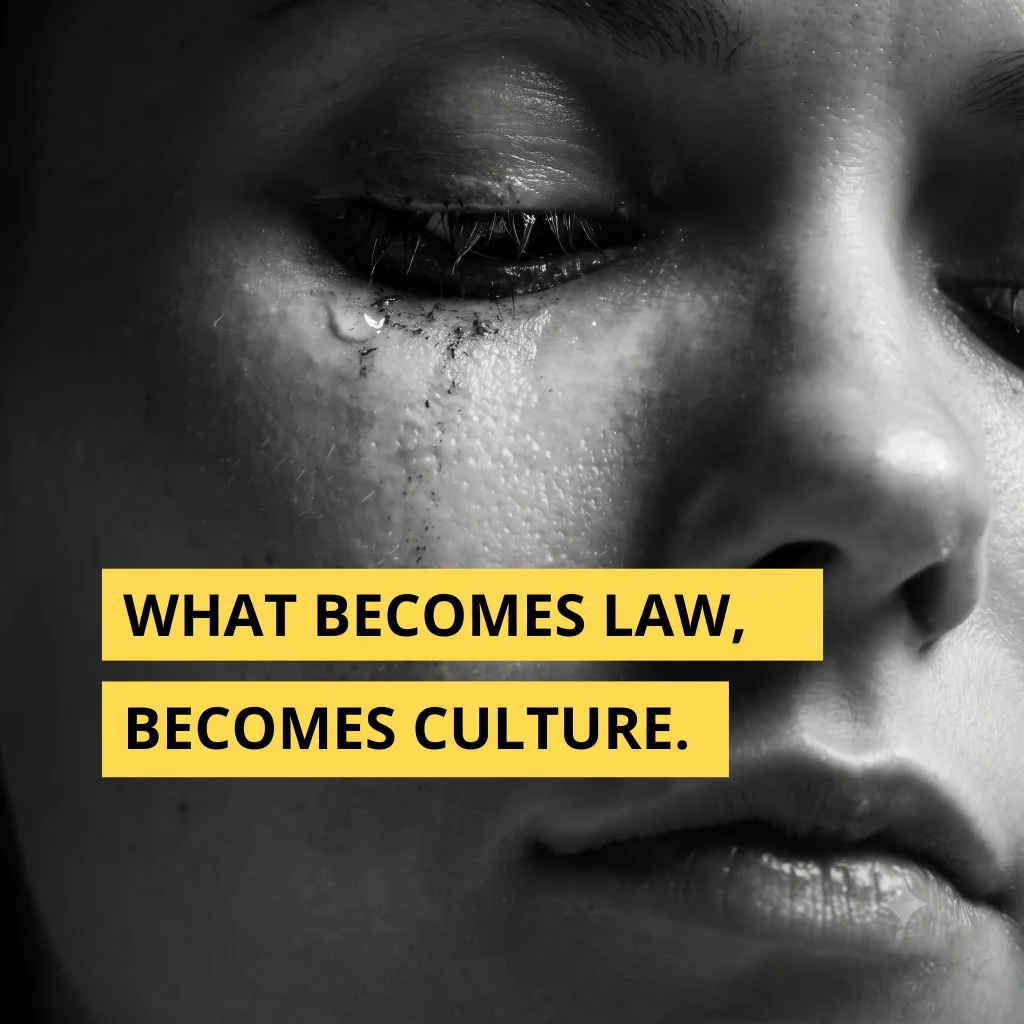
Remember this: what is permitted in law shapes what society normalises – and that is exactly why this battle cannot be lost. “What becomes law, eventually becomes culture.”
Understanding the Case
In May 2024, the Sex Workers Education and Advocacy Taskforce (SWEAT) and other applicants approached the Cape Town High Court, seeking an order to declare South Africa’s laws criminalising prostitution unconstitutional. If successful, the application would legalise prostitution in South Africa. They seek the decriminalisation of both prostituted persons and the so-called ‘buyers’.. Put simply, they are asking the court to overturn existing legal protections and fundamentally change how prostitution is regulated in South Africa.
While this may appear to be a narrow legal debate, the implications extend far beyond the parties involved.
The outcome of this case will influence how police respond to prostitution-related crimes, how schools and universities talk about prostitution, and how society understands the difference between freedom, exploitation and human dignity.
Why Did Cause for Justice Become Involved?
When legislation is challenged in court, the State is expected to defend the law and explain why it remains constitutionally valid. In this case, the State failed to do so.
Cause for Justice therefore applied to join the proceedings to ensure that public interest would be represented before the court.
As an organisation committed to constitutional participation, public education and human dignity, CFJ believes that important societal questions deserve careful consideration from all perspectives.
Why Does This Matter?
For many people, prostitution is often discussed through the language of choice, economics or personal freedom. Far less attention is given to the broader societal implications. The Constitutional Court itself previously recognised several concerns associated with prostitution, including exploitation, violence, trafficking, organised crime, public safety concerns and the degradation of human dignity. These concerns were central to the Constitutional Court’s judgement in S v Jordan, where the existing legal framework was upheld.
The current challenge asks the court to revisit those questions. That is why this case matters.
It concerns the values and principles that inform public policy for an entire nation.
The Bigger Question
At its heart, this case raises a larger societal question: What role should the law play in shaping culture?
Laws do more than regulate behaviour. They communicate what society accepts, protects, discourages and promotes. Over time, laws influence institutions, communities and cultural norms. They help shape what future generations come to view as acceptable and normal.
This is why legal decisions cannot be viewed in isolation. Court judgements may begin in courtrooms, but their effects are often felt in homes, schools, workplaces and communities for years to come.
What becomes law, becomes culture.
Why Public Awareness Matters
One of the challenges facing modern society is that many people feel disconnected from legal processes. By the time people recognise the implications, the conversation has often moved on.
This campaign seeks to bridge that gap. Our objective is to help ordinary South Africans understand:
- what is happening,
- why it matters,
- and how they can participate meaningfully.
Where Things Stand Now
The case is currently progressing through the legal process. Extensive evidence has already been filed. Applicants have submitted their replying affidavits. CFJ and its legal team are now preparing responses and working towards the next major stages of legal argument leading up to the October 2026 hearing.
Significant work remains ahead. Legal research, expert evidence, consultations and court preparation require substantial resources and commitment.
The work is already underway. The hearing may still be months away, but the legal effort has already begun.
How You Can Make a Difference
If you believe that these issues matter, there are several ways you can support this cause.
Stay Informed
Follow campaign updates and subscribe to receive future communications. Understanding the issues is the first step towards meaningful engagement.
Share the Information
Help others understand what is at stake.
Many people remain unaware of the case and its broader implications.
Support the Legal Effort
Strategic legal advocacy requires significant resources.
Contributions help support the legal work, research, expert testimony and court preparation required to ensure these issues are fully considered.
PRAY
We recognise that these matters involve profound questions about justice, dignity and the future of our nation.
We invite supporters to continue praying for wisdom, truth and justice throughout the legal process.
LOOKING AHEAD
Over the coming months we will continue providing updates, educational content and opportunities for engagement as this case progresses.
Our commitment is simple:
- To help South Africans understand the issues.
- To encourage informed participation.
- And to ensure that important societal questions receive the attention they deserve.
Because laws do not merely govern society. They help shape it.
And what becomes law, eventually becomes culture.